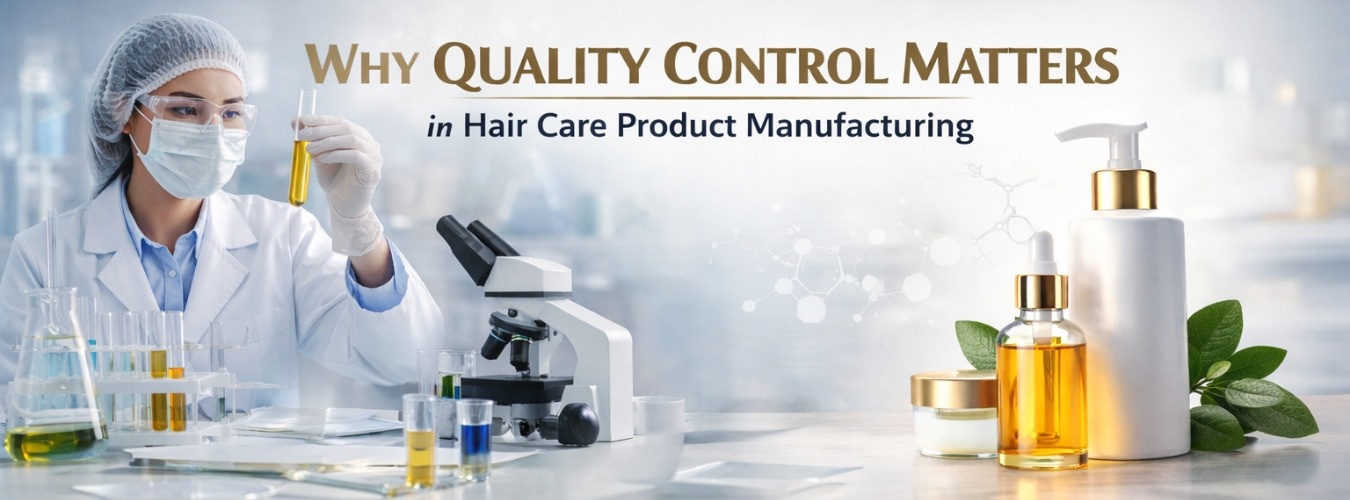
In the modern cosmetic industry, quality is no longer just a benchmark. It is the foundation on which successful brands are built. This is especially true in hair care product manufacturing, where products directly interact with the scalp and hair on a daily basis.
Consumers today are highly aware, informed, and selective. They carefully evaluate ingredients, product performance, and brand credibility before making a purchase. In such a competitive environment, quality control becomes a critical factor that determines whether a product succeeds or fails in the market.
For private label brands and cosmetic manufacturers, maintaining strict quality standards is not just about compliance. It is about delivering consistent performance, ensuring safety, and building long-term trust.
Understanding Quality Control in Hair Care Manufacturing
Quality control in hair care manufacturing refers to a structured process that ensures every product meets defined standards of safety, consistency, and effectiveness. It is not limited to final product testing but is integrated throughout the entire production cycle.
From sourcing raw materials to delivering finished products, every stage is monitored to maintain high standards. This systematic approach ensures that each batch performs consistently and meets regulatory requirements.
According to global manufacturing guidelines, cosmetic quality systems must ensure product safety, traceability, and reproducibility across batches, making quality control a core operational function rather than a final checkpoint.
The Growing Importance of Quality in the Global Hair Care Market
The importance of quality control becomes clearer when we look at the size and growth of the hair care industry.
- The global hair care market is valued at over $90 billion in 2026
- It is projected to exceed $120 billion by 2030, growing at a steady CAGR of around 5–6%
- Shampoos alone contribute nearly 30–35% of the total hair care segment
In a market of this scale, even a small quality issue can affect thousands of consumers. This makes quality control not just important but essential for sustainable growth.
Why Quality Control is Critical in Hair Care Products
Hair care products are applied regularly and often remain in contact with the scalp for extended periods. This increases the need for safety, stability, and performance.
Ensuring Product Safety
One of the primary roles of quality control is to ensure that products are safe for use. Improper formulation or contamination can lead to scalp irritation, allergic reactions, or long-term damage.
Studies indicate that over 20% of cosmetic-related complaints are linked to skin or scalp irritation, often caused by formulation imbalance or contamination.
Maintaining Consistency Across Batches
Consistency is a key expectation from consumers. A shampoo that performs well once must deliver the same results every time.
Without proper quality control:
- Texture may vary
- Fragrance may change
- Effectiveness may reduce
Good Manufacturing Practices (GMP) ensure that products are produced consistently with controlled processes and standardized formulations.
Protecting Brand Reputation
In the cosmetic industry, reputation is built on trust. A single defective product can lead to negative reviews, customer loss, and long-term brand damage.
Research shows that nearly 60% of consumers stop purchasing a brand after a bad product experience.
This makes quality control a direct contributor to customer retention and brand loyalty.
Meeting Regulatory Requirements
Hair care products must comply with national and international safety standards. Regulatory authorities require manufacturers to follow strict guidelines related to formulation, labeling, and safety testing.
Standards such as ISO 22716 (GMP for cosmetics) ensure that products are manufactured under controlled and hygienic conditions. Non-compliance can result in product recalls, legal issues, and market restrictions.
The Role of GMP in Quality Assurance
Good Manufacturing Practices (GMP) form the backbone of quality control in cosmetic manufacturing. These guidelines define how products should be manufactured, tested, and stored to ensure consistent quality.
GMP focuses on:
- Controlled manufacturing environments
- Proper equipment maintenance
- Trained personnel
- Documentation and traceability
Companies that follow GMP standards experience significantly lower product defects and higher operational efficiency.
Key Stages of Quality Control in Hair Care Manufacturing
Quality control is a continuous process integrated into every stage of production.
Raw Material Testing
The quality of the final product depends heavily on the quality of its ingredients. Each raw material must be tested for purity, safety, and compliance before use.
This step ensures that only approved and safe ingredients are used in production.
Formulation Accuracy
Hair care formulations require precise measurement and mixing of ingredients. Even minor deviations can affect product performance and stability.
Manufacturers maintain strict formulation protocols to ensure consistency across batches.
Production Monitoring
During manufacturing, processes are closely monitored to maintain hygiene, temperature control, and mixing accuracy. This helps prevent contamination and ensures uniformity.
Packaging Control
Packaging is not just about aesthetics it plays a critical role in product protection. Proper packaging ensures:
- Product stability
- Protection from contamination
- Accurate labeling
Incorrect packaging can compromise product quality and shelf life.
Final Product Testing
Before products are released into the market, they undergo multiple quality checks to ensure safety and performance.
These tests include microbial analysis, stability testing, and performance evaluation. Stability testing alone ensures that products remain effective for 12–36 months, depending on formulation.
Impact of Poor Quality Control
Ignoring quality control can have serious consequences for both manufacturers and brands.
Products with poor quality may lead to:
- Customer complaints and returns
- Product recalls
- Regulatory penalties
- Loss of brand credibility
In global markets, product recalls can cost companies millions and damage their reputation permanently.
Quality Control as a Competitive Advantage
In today’s competitive market, quality is a key differentiator. Brands that consistently deliver high-quality products gain customer trust and stand out from competitors.
High-quality products allow brands to:
- Build long-term customer relationships
- Expand into international markets
- Position themselves as premium brands
Quality is no longer just an operational requirement it is a strategic advantage.
Importance for Private Label Hair Care Brands
For private label brands, quality control becomes even more important because they rely entirely on third-party manufacturers.
A reliable manufacturing partner ensures:
- Consistent product quality
- Compliance with regulations
- Scalable production
- Strong brand positioning
Choosing a manufacturer with advanced quality systems is essential for long-term success.
How Professional Manufacturers Maintain Quality Standards
Experienced cosmetic manufacturers implement structured quality systems to maintain consistency and safety.
These systems include strict raw material sourcing, in-process monitoring, batch documentation, and final product testing. Continuous improvement and regular audits further strengthen quality control processes.
Manufacturers that invest in quality not only meet industry standards but also build long-term partnerships with brands.
Future of Quality Control in Hair Care Manufacturing
As the cosmetic industry continues to evolve, quality control is becoming more advanced and data-driven. Manufacturers are focusing on improving testing methods, enhancing traceability, and maintaining higher safety standards.
With increasing global competition and stricter regulations, quality control will remain a key factor in determining the success of both manufacturers and brands.
Conclusion
Quality control is the foundation of successful hair care product manufacturing. It ensures safety, consistency, and performance three factors that directly influence customer satisfaction and brand growth.
In a rapidly growing industry where consumers demand transparency and results, maintaining high-quality standards is not optional it is essential.
For private label brands and cosmetic manufacturers, investing in strong quality control systems is the key to building trust, ensuring compliance, and achieving long-term success.
FAQs
1. What is quality control in hair care product manufacturing?
Quality control in hair care manufacturing is a systematic process that ensures products are safe, effective, and consistent. It includes testing raw materials, monitoring production, and evaluating final products before they reach the market.
2. Why is quality control important in hair care products?
Quality control is essential to ensure product safety, maintain consistency across batches, and meet regulatory standards. It also helps prevent issues like contamination, product failure, and customer dissatisfaction.
3. What tests are performed during hair care product quality control?
Hair care products undergo multiple tests such as microbial testing, stability testing, performance testing, and compatibility testing to ensure safety and effectiveness.
4. How does quality control affect product consistency?
Quality control ensures that every batch of a product delivers the same texture, fragrance, and performance. This consistency is important for building customer trust and brand loyalty.
5. What happens if quality control is not maintained?
Poor quality control can lead to product contamination, inconsistent results, customer complaints, and even regulatory penalties or product recalls.