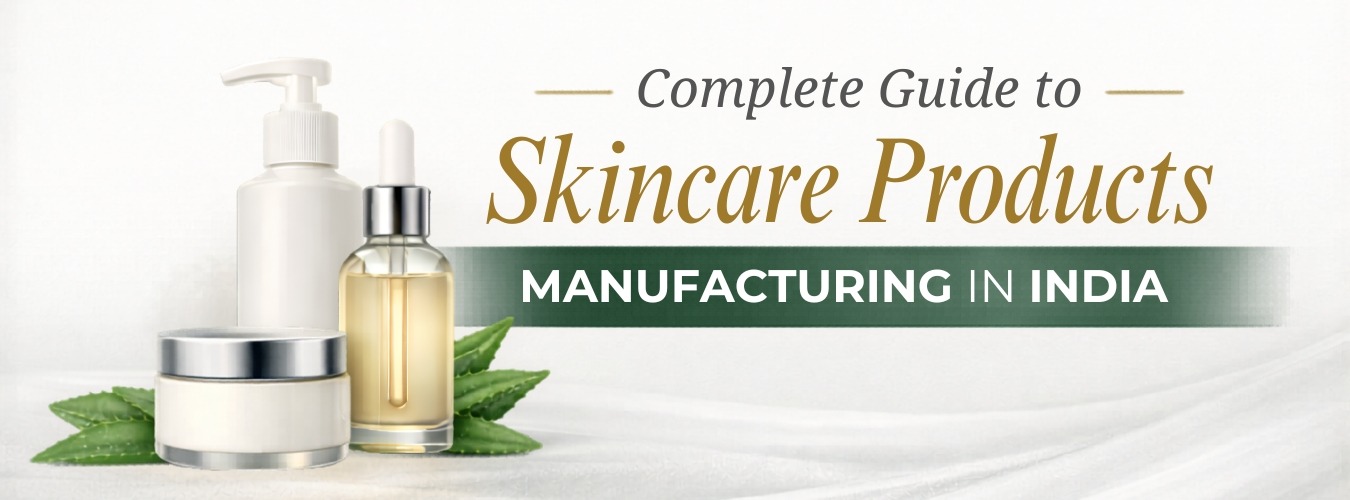
India has rapidly emerged as one of the most promising hubs for skincare product manufacturing. With a strong combination of advanced production capabilities, cost-effective solutions, and access to natural ingredients, the country is attracting both domestic and international cosmetic brands.
The demand for skincare products is growing significantly due to rising consumer awareness, changing lifestyles, and increasing focus on skin health. As a result, businesses are actively looking for reliable manufacturing partners who can deliver high-quality products while maintaining global standards.
Overview of the Skincare Market in India
The skincare industry in India is experiencing strong and steady growth, making it a highly attractive sector for investment.
- The Indian skincare market is valued at approximately USD 8–10 billion in 2026
- It is expected to grow at a CAGR of 8–10% over the next decade
- Skincare contributes nearly 35–40% of the total cosmetic industry in India
This growth is driven by increasing awareness of skin concerns such as acne, pigmentation, aging, and sensitivity, along with a rising preference for premium and natural products.
Why India is a Preferred Destination for Skincare Manufacturing
India offers several advantages that make it a preferred choice for skincare manufacturing.
Key Advantages
- Cost-effective production compared to global markets
- Availability of skilled professionals and advanced R&D facilities
- Access to herbal and Ayurvedic ingredients
- Strong export capabilities
India exports billions worth of cosmetic products annually, highlighting its position as a global manufacturing hub.
Types of Skincare Products Manufactured in India
Indian manufacturers offer a wide range of skincare products catering to different consumer needs.
Common Product Categories
- Face washes and cleansers
- Moisturizers and creams
- Serums and facial oils
- Sunscreens
- Face masks and scrubs
Specialized Skincare Products
- Anti-aging formulations
- Acne and oil-control products
- Skin brightening solutions
- Hydration and repair products
The increasing demand for targeted skincare solutions is pushing manufacturers to develop more advanced and customized formulations.
Skincare Manufacturing Process in India
Understanding the manufacturing process helps brands ensure product quality and consistency.
1. Product Concept and Formulation
The process begins with identifying the product concept and target audience. Based on this, formulations are developed using active ingredients and functional components.
Manufacturers focus on creating formulations that are both effective and safe for long-term use.
2. Raw Material Sourcing
High-quality raw materials are essential for producing effective skincare products. Ingredients are sourced from certified suppliers and tested for purity and safety.
India’s rich biodiversity provides access to natural ingredients such as aloe vera, turmeric, neem, and essential oils.
3. Manufacturing and Mixing
The formulation is then processed in controlled environments using advanced machinery. Proper temperature, mixing speed, and hygiene conditions are maintained to ensure consistency.
4. Filling and Packaging
Once the product is ready, it is filled into suitable packaging such as bottles, jars, or tubes. Packaging plays an important role in maintaining product stability and enhancing brand appeal.
5. Quality Testing and Final Inspection
Before the product is released, it undergoes rigorous testing to ensure safety, stability, and performance. This step is crucial for maintaining high standards and regulatory compliance.
Importance of Quality Control in Skincare Manufacturing
Quality control is one of the most critical aspects of skincare manufacturing. It ensures that every product meets safety standards and delivers consistent results.
- Prevents contamination and formulation errors
- Ensures product stability and shelf life
- Maintains consistency across batches
Studies indicate that over 25% of cosmetic product complaints are related to quality issues, highlighting the importance of strict quality systems.
Role of Private Label and OEM/ODM Manufacturing
Private label manufacturing has transformed the skincare industry by making it easier for businesses to launch their own brands.
Private Label Manufacturing
Allows brands to create customized products without setting up their own production facilities.
OEM (Original Equipment Manufacturer)
The brand provides the formulation, and the manufacturer produces it.
ODM (Original Design Manufacturer)
The manufacturer develops the formulation and provides ready-to-market solutions.
This flexibility enables businesses to choose the model that best suits their needs.
Certifications and Compliance in India
Skincare products must meet strict regulatory standards to ensure safety and quality.
Common Certifications
- GMP (Good Manufacturing Practices)
- ISO standards
- FDA registration
These certifications ensure that products are manufactured under controlled conditions and meet international quality benchmarks.
Growing Demand for Natural and Herbal Skincare
The demand for natural and herbal skincare products is rising rapidly in India and globally.
- The natural cosmetics market is expected to grow at 10%+ CAGR
- Consumers prefer products free from harmful chemicals
- Herbal ingredients are gaining popularity
Opportunities for Skincare Brands in India
India offers significant opportunities for skincare brands looking to grow and expand.
- Increasing demand in Tier 2 and Tier 3 cities
- Growing preference for premium products
- Expansion of export markets
- Rising awareness of skincare routines
Brands that focus on quality, innovation, and customer needs can achieve strong growth in this market.
How to Choose the Right Skincare Manufacturer in India
Selecting the right manufacturing partner is crucial for success.
1. Product Concept and Formulation
- Experience and expertise in skincare formulations
- Certifications and compliance standards
- Customization capabilities
- Production capacity and scalability
A reliable manufacturer ensures smooth product development and long-term business growth.
Future Trends in Skincare Manufacturing
The skincare industry continues to evolve with changing consumer demands.
Key Trends
- Growth of personalized skincare
- Increased demand for multifunctional products
- Focus on sustainability and eco-friendly packaging
- Expansion of premium skincare segment
Manufacturers who adapt to these trends will lead the market in the coming years.
Conclusion
India has established itself as a leading destination for skincare product manufacturing, offering a strong combination of quality, innovation, and cost efficiency. With a rapidly growing market and increasing global demand, the country provides immense opportunities for brands and businesses.
For companies looking to launch or expand their skincare line, partnering with a reliable private label manufacturer is the key to success. By focusing on quality, compliance, and innovation, businesses can build strong brands and achieve long-term growth in the competitive cosmetic industry.