Body butter has become one of the most sought-after products in the skincare world. Unlike regular lotions, body butter is thicker, richer, and provides intense hydration that lasts longer. It is especially popular among people with dry skin, those living in cold climates, and anyone looking for a luxurious skincare experience.
The global body butter market is showing impressive growth. According to market research, the global body butter market was valued at USD 3.52 Billion in 2024 and is projected to reach USD 6.52 Billion by 2033, growing at a compound annual growth rate of 7.12% during the forecast period .
In India, the demand for body butter is also rising steadily. As consumers become more aware of skincare ingredients and seek products that offer deep nourishment, body butter has found a strong place in their routines. This creates an excellent opportunity for entrepreneurs and established brands to launch their own body butter lines.
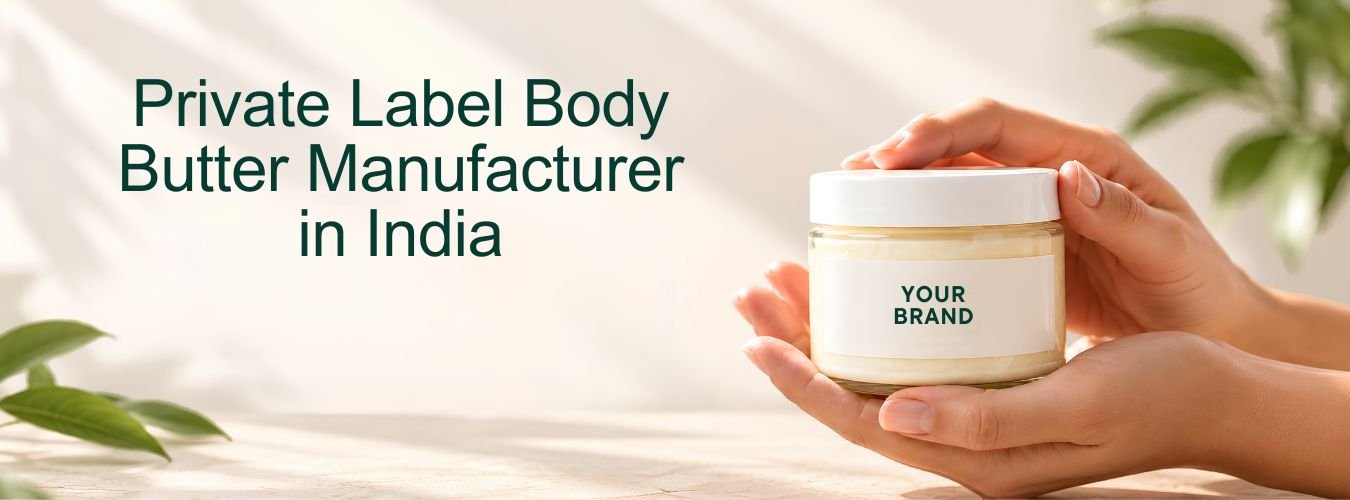
For brands looking to enter this market, partnering with a private label body butter manufacturer is often the smartest path. It allows you to offer high-quality products under your own brand name without the need for your own manufacturing facility.
Understanding Private Label Manufacturing
Before we dive deeper into the specifics of body butter, it is important to understand what private label manufacturing means.
What is Private Label?
Private label manufacturing is a business arrangement where a manufacturer produces goods that are sold under the brand name of another company. The manufacturer handles the production, while the brand focuses on marketing, sales, and building customer relationships.
In the context of body butter, this means you can work with a manufacturer to produce body butter with your chosen formulation, packaging, and branding. The product is exclusively yours it is not sold to other brands under different names.
Private Label vs. White Label: What is the Difference?
It is important to understand the difference between private label and white label, as these terms are often confused.
White label products are pre-made formulas that manufacturers sell to multiple brands. The same product may be sold under different brand names. The level of customization is limited, and you have little control over the formulation.
Private label offers much more flexibility. You can customize the formulation, ingredients, scent, packaging, and more. The product is exclusive to your brand, which helps you stand out in the market and build a stronger identity.
Why Choose Private Label for Body Butter?
There are several compelling reasons to choose private label manufacturing for your body butter brand:
Full Brand Control: You get to decide on the ingredients, texture, scent, and packaging. This allows you to create a product that truly reflects your brand’s values and appeals to your target audience.
Better Profit Margins: Since your product is unique, you can set premium prices. Customers are often willing to pay more for a product they cannot find anywhere else.
Market Differentiation: A private label product helps you stand out from competitors. You are not just selling another generic body butter you are offering something exclusive.
Faster Time to Market: While there is some development work involved, private label is still faster than building your own manufacturing facility from scratch. You can leverage the manufacturer’s expertise and infrastructure.
The Body Butter Manufacturing Process in India
Understanding how body butter is made can help you make better decisions when working with a manufacturer.
Step 1: Formulation Development
The first step is developing the formulation. Body butter typically contains a combination of butters, oils, and waxes. The most common base is shea butter, which is known for its deep moisturizing properties. Cocoa butter, mango butter, and kokum butter are also popular choices.
According to scientific research, shea butter is extracted from the kernels of shea trees grown in Western and Sub-Saharan Africa. The quality of shea butter depends significantly on the processing methods and the quality of the raw kernels.
A skilled manufacturer will help you select the right combination of ingredients to achieve your desired texture, absorption rate, and scent profile.
Step 2: Ingredient Sourcing
Quality starts with the ingredients. A good manufacturer will source high-quality raw materials from reliable suppliers. They will conduct incoming inspections to verify the identity, purity, and quality of each ingredient.
For body butter, key ingredients include:
- Shea butter (the primary base)
- Cocoa butter (adds firmness)
- Coconut oil (adds lightness)
- Essential oils or fragrance oils (for scent)
- Vitamin E (as an antioxidant)
Step 3: Mixing and Heating
The ingredients are carefully weighed and mixed together. The mixture is heated to melt the butters and oils, then blended until smooth. Temperature control is critical during this stage to ensure the final product has the right consistency.
Step 4: Quality Testing
Before the product is approved, it undergoes rigorous testing. This includes:
- Stability Testing: Checking how the product holds up over time and under different temperature conditions.
- Microbial Testing: Ensuring the product is free from harmful bacteria.
- Texture and Feel Testing: Verifying that the product meets the desired sensory profile.
Step 5: Filling and Packaging
Once the formulation is approved and tested, the product is filled into containers. Body butter is typically packaged in jars, tins, or tubes. The packaging should protect the product from light and air, which can cause the butters to oxidize.
Step 6: Labeling and Compliance
All cosmetic products in India must comply with labeling regulations. Labels must include the product name, ingredient list, net quantity, manufacturing date, expiry date, and manufacturer information.
Regulatory Requirements for Body Butter Manufacturing in India
If you are planning to launch a body butter brand in India, you need to be aware of the regulatory requirements. Cosmetic manufacturing in India is governed by the Cosmetics Rules, 2020, under the Drugs and Cosmetics Act, 1940.
Manufacturing License (COS-8)
To manufacture cosmetics in India, you need a manufacturing license. The application is made to the State Licensing Authority in Form COS-5. Once approved, the license is granted in Form COS-8.
Loan License for Third-Party Manufacturing
If you are working with a third-party manufacturer, you may need a loan license. The application is made in Form COS-6, and the license is granted in Form COS-9. This allows your brand’s products to be manufactured at an already-licensed facility.
Good Manufacturing Practices
Manufacturers must follow Good Manufacturing Practices as specified in the Cosmetics Rules. This includes requirements for premises, equipment, quality control, and documentation.
Documentation Requirements
The manufacturer should maintain proper documentation, including:
- Master Formula Records (MFRs)
- Batch Manufacturing Records (BMRs)
- Batch Packing Records (BPRs)
- Certificates of Analysis (COA) for raw materials and finished products.
Key Ingredients in Premium Body Butter
The quality of your body butter depends largely on the ingredients used. Here are some key ingredients that make body butter effective and luxurious.
Shea Butter
Shea butter is the most common base for body butter. It is rich in vitamins A and E, which are known for their skin-nourishing properties. Shea butter is solid at room temperature but melts on contact with skin, making it easy to apply.
Cocoa Butter
Cocoa butter adds firmness to body butter and has a pleasant chocolate-like scent. It is highly moisturizing and helps improve skin elasticity.
Mango Butter
Mango butter is lighter than shea and cocoa butter. It absorbs quickly and is non-greasy, making it suitable for people who prefer a lighter feel.
Kokum Butter
Kokum butter is a non-greasy butter that is rich in essential fatty acids. It is often used in products for dry and cracked skin.
Carrier Oils
Carrier oils like coconut oil, sweet almond oil, and jojoba oil add moisture and improve the spreadability of body butter. They also carry the scent of essential oils.
Essential Oils
Essential oils provide natural fragrance and additional skincare benefits. Lavender, chamomile, and tea tree oils are popular choices.
Vitamin E
Vitamin E is an antioxidant that helps protect the product from oxidation and provides skin benefits.
What to Look for in a Private Label Body Butter Manufacturer
Choosing the right manufacturing partner is critical to your brand’s success. Here are the key factors to consider.
Manufacturing Capabilities and Capacity
You need a manufacturer whose production capacity matches your order volume. If you are starting small, look for a manufacturer who can accommodate low minimum order quantities (MOQs). As you grow, they should be able to scale up production to meet your needs.
Quality Control and Certifications
Quality control is non-negotiable. The manufacturer should have an in-house laboratory for testing raw materials and finished products. They should follow Good Manufacturing Practices and hold relevant certifications like ISO 22716 or GMP.
When evaluating a manufacturer, ask these questions:
- Do you run incoming inspection for raw materials?
- Do you test water quality used in production?
- Do you keep batch records and retention samples?
- What is your process for handling quality issues?
Research and Development Capabilities
A manufacturer with strong R&D capabilities can help you create unique formulations. They can develop custom body butter recipes that address specific skin concerns or incorporate trending ingredients.
Ask if they offer in-house formulation services and whether you can bring your own formula. Also, clarify who owns the final formula this is important for your brand’s long-term flexibility.
Custom Formulation Support
If you want a truly unique product, look for a manufacturer that offers custom formulation. They should be able to work with you to develop a body butter that matches your brand’s positioning.
This might include:
- Selecting specific butters and oils
- Creating a unique scent profile
- Developing a product for a particular skin type
- Adding active ingredients for specific benefits
Packaging Options
The right packaging can make your product stand out on the shelf. A good manufacturer will offer a range of packaging options, including:
- Glass jars (premium look)
- Plastic jars (lightweight and durable)
- Tins (eco-friendly and travel-friendly)
- Tubes (convenient for on-the-go use)
They should also be able to help you with labeling and design compliance.
Regulatory Support
The manufacturer should be familiar with Indian cosmetic regulations and able to provide the documentation needed for compliance. This includes Certificates of Analysis, Material Safety Data Sheets, and stability test reports.
The Advantages of Manufacturing in India
India has become a preferred destination for cosmetic manufacturing, and for good reason.
Skilled Workforce and Expertise
India has a large pool of skilled professionals in the cosmetic industry. Many manufacturers have teams with decades of experience in formulation, quality control, and regulatory compliance
Cost-Effectiveness
Manufacturing in India is cost-effective compared to many other countries. This allows brands to offer competitive prices while maintaining good margins.
Growing Supply Chain
India has a robust supply chain for cosmetic ingredients and packaging materials. This makes it easier to source everything you need for production.
Export Potential
India’s strategic location and well-developed logistics infrastructure make it an ideal base for exporting body butter to markets in the Middle East, Southeast Asia, and Africa
Market Opportunities for Body Butter Brands in India
The Indian skincare market offers several opportunities for body butter brands.
Growing Demand for Natural Products
Consumers are increasingly seeking products made with natural ingredients. Body butter, with its rich, plant-based ingredients, fits perfectly into this trend. Shea butter, cocoa butter, and other natural ingredients are highly appealing to health-conscious consumers.
Ayurvedic and Herbal Formulations
India has a rich tradition of Ayurvedic skincare. Incorporating Ayurvedic herbs and oils into body butter formulations can create unique products that appeal to both domestic and international markets.
E-commerce Growth
Online shopping is booming in India. Brands can reach customers across the country through e-commerce platforms without the need for extensive retail distribution. Social media and influencer marketing can help build awareness and trust.
Men’s Grooming Segment
The men’s grooming market is growing rapidly in India. Body butter products designed specifically for men, with appropriate scents and packaging, represent an underserved segment with significant potential.
Conclusion
The body butter market in India is full of opportunity. With growing consumer awareness and demand for natural, effective skincare products, now is an excellent time to launch your own body butter brand.
Private label manufacturing offers a practical path to market. It allows you to offer high-quality products under your own brand without the need for your own manufacturing facility. By partnering with the right manufacturer, you can focus on what you do best building your brand and connecting with customers.
When selecting a manufacturer, prioritize quality, compliance, and a collaborative approach. Ask the right questions, verify their capabilities, and ensure they share your commitment to excellence.
With the right partner and the right product, your body butter brand can thrive in this growing market.