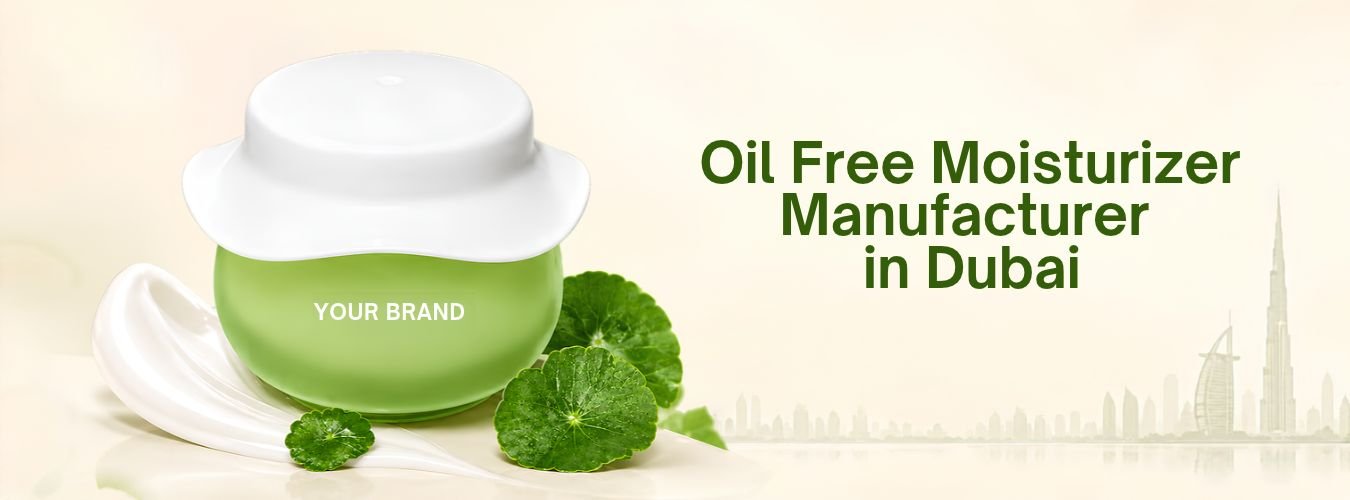
The demand for skincare products is growing across the United Arab Emirates, especially in major markets such as Dubai. Customers are looking for products that support healthy-looking skin, provide hydration, and feel comfortable in different weather conditions. Among these products, oil-free moisturizers have become an interesting option for skincare brands, retailers, salons, pharmacies, and beauty businesses.
An oil-free moisturizer is designed to hydrate the skin without relying on traditional oils as its main moisturizing ingredients. It is often developed with lightweight textures that absorb easily and leave less of a greasy feel. This makes it a useful product concept for people who prefer light skincare or have oily and combination skin.
For businesses planning to launch their own skincare range, choosing the right oil free moisturizer manufacturer in Dubai or a reliable manufacturing partner serving the Dubai market is an important step. The right partner can help with product development, ingredient selection, packaging, quality checks, and private label production.
Growing Demand for Oil-Free Moisturizers in Dubai
Dubai has a diverse customer base, including local residents, expatriates, tourists, and international shoppers. Customers have different skin types and skincare needs, creating opportunities for brands to develop products for specific audiences.
The UAE beauty and personal care market has a strong retail presence, supported by shopping malls, pharmacies, beauty stores, online marketplaces, and specialist skincare retailers.
According to a 2026 report summary from Euromonitor International, skincare retail value sales in the UAE reached AED 1.925 billion in 2025, showing growth of 9% compared with the previous year. This figure covers the wider skincare category, not oil-free moisturizers alone. However, it shows the scale of the skincare market in which moisturizer brands compete.
Dubai’s warm climate, air-conditioned indoor spaces, and varied customer preferences also make lightweight skincare products worth considering. A moisturizer that feels comfortable in humid conditions and does not leave a heavy finish can appeal to customers looking for simple daily skincare.
For new and growing brands, oil-free moisturizers offer opportunities across several product categories, including:
- Daily face moisturizers
- Lightweight gel moisturizers
- Moisturizers for oily and combination skin
- Hydrating moisturizers for everyday use
- Niacinamide-based moisturizers
- Aloe vera moisturizers
- Fragrance-free skincare products
Brands should research their target customers before selecting a formulation. Not every customer in Dubai has the same skin type or product preference.
What Is an Oil-Free Moisturizer?
An oil-free moisturizer is a skincare product developed without adding traditional oils as its main moisturizing ingredients. Instead, it may use water-based ingredients, humectants, skin-conditioning agents, and suitable emollients to improve skin hydration and texture.
The purpose is to provide moisture while maintaining a light and comfortable feel.
Oil-free does not automatically mean that a product contains no emollients or conditioning ingredients. It is important to review the complete formula and understand how each ingredient works.
How Does an Oil-Free Moisturizer Work?
Many oil-free moisturizers use humectants. These ingredients help attract and hold water in the outer layers of the skin.
For example, glycerin and hyaluronic acid are commonly used in hydrating skincare products. Other ingredients, such as panthenol and aloe vera, can support skin conditioning and improve the product’s overall feel.
The final performance depends on the complete formulation, ingredient levels, product stability, and how the product is used.
Who Can Use Oil-Free Moisturizers?
Oil-free moisturizers are commonly developed for customers who prefer lightweight skincare.
Potential target customers include:
- People with oily or combination skin
- Customers who dislike heavy cream textures
- People looking for a lightweight daily moisturizer
- Customers interested in gel-based skincare
- Men and women who prefer simple skincare routines
However, oil-free products are not automatically suitable for everyone. Customers with dry or sensitive skin may need a richer or specially tested formulation.
Important Ingredients Used in Oil-Free Moisturizers
Ingredient selection plays an important role in the quality, texture, and performance of a moisturizer. A manufacturer should select ingredients according to the product’s purpose, target skin type, stability requirements, and local regulatory standards.
Here are some commonly used ingredients in oil-free moisturizer formulations.
1. Hyaluronic Acid
Hyaluronic acid is a popular skincare ingredient known for its ability to attract and retain water. It is often used in lightweight moisturizers and hydrating gels.
It can help give the skin a hydrated and smooth appearance. It is suitable for brands looking to develop a modern, hydration-focused product.
2. Niacinamide
Niacinamide, also known as Vitamin B3, is widely used in facial skincare products.
It is included in moisturizer formulations designed to support the skin barrier and improve the appearance of uneven skin tone. Brands may choose it when developing products for customers interested in multi-benefit skincare.
3. Glycerin
Glycerin is a well-known humectant used in many skincare formulations. It helps attract water and supports skin hydration.
It can be included in gel-based and lotion-based moisturizers. It is also useful when a brand wants to develop a simple daily hydration product.
4. Aloe Vera
Aloe vera is commonly used in skincare products because of its skin-conditioning properties.
It can be included in lightweight moisturizers, especially products developed around a fresh and comfortable skin feel. The quality and type of aloe vera material should be selected according to the formulation requirements.
5. Panthenol
Panthenol, also known as provitamin B5, is used in many personal care products.
It helps condition the skin and can support the overall feel of a moisturizer. It is often combined with ingredients such as glycerin and hyaluronic acid.
6. Allantoin
Allantoin is used as a skin-conditioning ingredient in different skincare products. It can help improve the feel of a formula and is commonly considered for products developed for daily use.
7. Suitable Emollients and Texture Ingredients
Even when a moisturizer is marketed as oil-free, the formula may need suitable ingredients to provide a smooth texture and reduce moisture loss.
The manufacturer should select these ingredients carefully to meet the product’s intended oil-free positioning. The final ingredient list and claims must accurately reflect the actual formula.
Types of Oil-Free Moisturizers Brands Can Develop
Different customers look for different textures, ingredients, and product benefits. A private label manufacturer can help brands select a suitable product concept.
Lightweight Daily Moisturizer
A lightweight daily moisturizer is designed for regular use. It may contain glycerin, panthenol, and other hydrating ingredients.
This type of product can be positioned for customers who prefer a simple skincare routine.
Oil-Free Gel Moisturizer
Gel moisturizers usually have a light texture and are easy to spread. They are a suitable product concept for brands targeting customers who dislike thick creams.
A gel moisturizer may be developed with aloe vera, hyaluronic acid, and other water-based ingredients.
Niacinamide Moisturizer
A niacinamide moisturizer combines hydration with the benefits associated with Vitamin B3.
Brands can develop different versions depending on their target audience, ingredient levels, and desired product claims.
Aloe Vera Moisturizer
Aloe vera-based moisturizers are often positioned around a fresh and lightweight skincare experience.
They can be developed as daily-use gels or lotions, depending on the formulation and packaging.
Fragrance-Free Moisturizer
Some customers prefer skincare products without added fragrance. Brands can consider fragrance-free formulations for customers who want a simpler product.
The final product should be tested properly, and claims such as “suitable for sensitive skin” should only be used when supported by appropriate evidence.
OEM, ODM and Private Label Oil-Free Moisturizer Manufacturing
When starting a skincare brand, businesses can choose different manufacturing models. OEM, ODM, and private label manufacturing offer different levels of product development and customisation.
OEM Manufacturing
OEM stands for Original Equipment Manufacturing.
In this model, the brand provides its product requirements or an existing formulation, and the manufacturer produces the product according to the agreed specifications.
OEM manufacturing can be useful for established skincare brands that already have a product concept and clear formulation requirements.
ODM Manufacturing
ODM stands for Original Design Manufacturing.
In this model, the manufacturer helps develop the product based on the brand’s requirements. This may include formulation development, texture selection, ingredient suggestions, and packaging support.
ODM can be a practical option for startups that want to introduce an oil-free moisturizer but do not have their own formulation.
Private Label Manufacturing
Private label manufacturing allows a business to sell a product under its own brand name.
The manufacturer produces the product, while the brand owner works on branding, packaging design, marketing, and sales. Depending on the manufacturer’s services, businesses may choose an existing formulation or request certain changes.
For startups, retailers, distributors, and online sellers, private label manufacturing can provide a way to enter the skincare market without setting up their own production facility.
Oil-Free Moisturizer Manufacturing Process
A professional manufacturing process involves several steps. Each stage is important for producing a consistent and stable skincare product.
1. Product Requirement Discussion
The process begins with understanding the brand’s requirements.
The manufacturer should discuss the target customer, skin type, product texture, key ingredients, fragrance preference, packaging size, and expected price range.
2. Formula Selection and Development
The formulation team selects suitable ingredients and develops the product according to the agreed specifications.
For a lightweight moisturizer, the formula may include water, humectants, skin-conditioning ingredients, emulsifiers or other texture agents, preservatives, and additional components as required.
The exact formulation depends on the product type and its intended use.
3. Raw Material Checking
Raw materials should be checked against the required specifications before production.
This can include reviewing supplier documents, ingredient identity, quality information, and other relevant checks.
4. Manufacturing and Mixing
The selected ingredients are processed using suitable manufacturing equipment.
The mixing method, temperature, processing time, and order of ingredient addition depend on the formulation. Proper control helps maintain product consistency.
5. Quality Testing
The finished batch should go through appropriate quality checks before filling.
Depending on the formula, testing may include appearance, colour, fragrance, pH, viscosity, microbial quality, stability, and packaging compatibility.
6. Filling and Packaging
After the required checks, the product is filled into selected containers.
The packaging should be clean, suitable for the formula, and able to protect the product during storage and transport.
7. Final Inspection and Dispatch
The finished products should be checked for correct filling quantity, packaging condition, batch details, and label information before dispatch.
Brands should confirm the agreed quality documents and delivery requirements with the manufacturer.
Packaging Options for Oil-Free Moisturizers
Packaging is an important part of a skincare product. It affects product presentation, ease of use, storage, and customer experience.
Oil-free moisturizers can be packed in different formats depending on the product’s texture and brand positioning.
Tube Packaging
Tubes are commonly used for lightweight creams and gel moisturizers. They are easy to carry and convenient for daily use.
Available options may include different sizes, cap styles, and printed designs.
Pump Bottles
Pump bottles can be suitable for lotions and liquid moisturizers. They allow controlled dispensing and can support a clean product presentation.
Airless Pump Bottles
Airless packaging can help reduce direct contact between the product and outside air during use. It may be considered for selected formulations, subject to compatibility and testing.
Jar Packaging
Jars can be used for cream-based moisturizers. They offer a wide opening and allow customers to access the product easily.
However, the packaging should be selected after considering the product’s preservation system and hygiene requirements.
Travel-Size Packaging
Smaller packs can be useful for trial products, travel retail, promotional kits, and online sample sets.
Brands entering Dubai may consider different pack sizes to serve retail, pharmacy, salon, and e-commerce customers.
Quality and Safety Standards for Moisturizer Manufacturing
Quality control is essential when developing skincare products for the UAE market. A moisturizer should be checked for product consistency, safety, stability, and packaging suitability.
Important quality checks may include:
- Appearance and colour
- Fragrance, where applicable
- pH value
- Viscosity and texture
- Microbial quality
- Stability under suitable conditions
- Packaging compatibility
- Batch-to-batch consistency
Manufacturers should maintain suitable production records and quality documents. Brands should ask for relevant test reports and product specifications before confirming an order.
How to Choose the Right Oil-Free Moisturizer Manufacturer in Dubai
Choosing a manufacturing partner is one of the most important decisions for a skincare business. A suitable partner should understand your product requirements and provide clear information about production, quality, documentation, and delivery.
Consider the following points before making a decision.
1. Formulation Experience
Ask whether the manufacturer has experience developing facial moisturizers, gel-based products, and lightweight skincare formulations.
A manufacturer should be able to explain the purpose of key ingredients and how the formula will meet your product requirements.
2. Quality Control System
Check the manufacturer’s quality procedures and the testing carried out during production.
Ask about batch records, raw material checks, finished-product testing, and available quality documents.
3. Customisation Options
Your product should match your brand’s target audience. Ask whether the manufacturer can support changes in texture, fragrance, ingredients, colour, and packaging.
4. Packaging Support
Check whether the manufacturer can provide different packaging options and help assess their suitability for the formula.
5. Clear Pricing and Minimum Order Quantity
Before confirming an order, ask for a written quotation that explains the minimum order quantity, product cost, packaging cost, sample charges, design charges, taxes, and delivery terms.
6. Export and Documentation Support
If the product is being manufactured outside the UAE, discuss export documents, product information, certificates, and any registration support available.
The brand owner or UAE importer should independently confirm the applicable local requirements.
Business Opportunities for Oil-Free Moisturizers in Dubai
Beauty Stores and Cosmetic Retailers
Independent beauty stores and cosmetic retailers can provide opportunities for new skincare brands. A lightweight moisturizer can be included in daily skincare collections.
Pharmacies and Skincare Clinics
Brands may explore pharmacy and professional skincare channels, depending on product positioning and the requirements of each retailer.
Any clinical, dermatological, or treatment-related claims should be supported by suitable evidence and must follow applicable rules.
E-Commerce Platforms
Online shopping allows brands to reach customers across Dubai and other parts of the UAE.
Product pages should clearly explain the texture, ingredients, directions for use, pack size, and intended customer. Good product photographs and accurate descriptions can help customers make informed choices.
Salons and Beauty Businesses
Salons and beauty businesses may be interested in skincare products that fit their customer needs. Brands can explore retail-size products or suitable professional-use formats where permitted.
Common Mistakes to Avoid When Launching an Oil-Free Moisturizer
A good product idea needs proper planning. Brands should avoid these common mistakes:
- Selecting ingredients only because they are popular on social media.
- Assuming every oil-free moisturizer is suitable for all skin types.
- Choosing packaging without checking formula compatibility.
- Making claims that are not supported by product testing.
- Ignoring product registration and local labelling requirements.
- Not requesting samples before approving bulk production.
- Selecting a manufacturer only on the basis of the lowest quotation.
- Failing to plan stock, shipping, and delivery timelines.
Before launching, test the product concept with your target audience and review the complete product documentation.
The Rich Daddy International: Your Cosmetic Manufacturing Partner
The Rich Daddy International is a cosmetic third-party manufacturing company based in India. The company works in the cosmetic manufacturing space, supporting businesses interested in developing and selling products under their own brands.
For businesses planning to introduce an oil-free moisturizer in Dubai, working with an experienced manufacturing partner can help organise product development, formulation discussions, packaging selection, and production planning.
Brands can discuss their requirements for lightweight moisturizers, gel-based products, hydration-focused formulations, and other skincare concepts.
If you are looking for an OEM, ODM, or private label manufacturing partner, you can contact The Rich Daddy International to discuss your product idea, expected order quantity, packaging preferences, and documentation needs.
Visit the official website: The Rich Daddy International.
For UAE-bound orders, confirm export arrangements, product documentation, registration responsibilities, and delivery terms before finalising production.
Conclusion
The demand for skincare products in Dubai creates opportunities for businesses interested in launching their own oil-free moisturizer range. Customers looking for lightweight textures and daily hydration make this a product category worth exploring.
However, success depends on more than choosing popular ingredients or attractive packaging. Brands should focus on suitable formulations, product testing, quality control, clear product claims, and UAE compliance requirements.
Choosing the right oil free moisturizer manufacturer in Dubai or a reliable manufacturing partner serving the UAE market can help businesses plan their products more effectively. With the right OEM, ODM, or private label approach, brands can develop moisturizers that match their target customers and business goals.
If you are planning to launch an oil-free moisturizer under your own brand, connect with The Rich Daddy International to discuss your product requirements and manufacturing options.