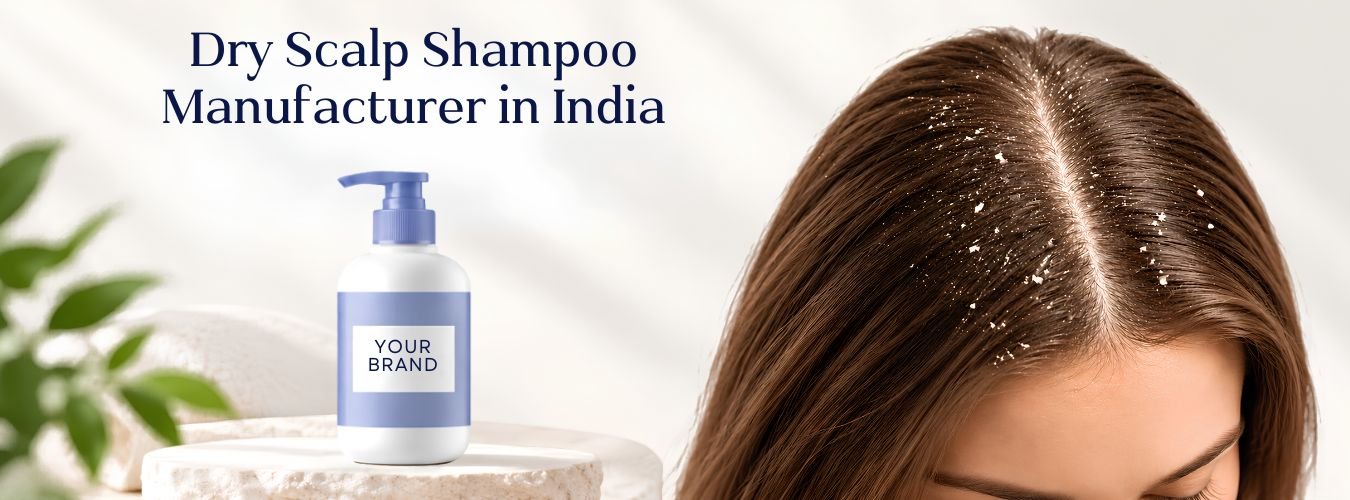
The demand for specialised hair care products is creating new opportunities for cosmetic brands, startups, salons, distributors, and beauty businesses. Among these categories, dry scalp shampoo is gaining attention from consumers looking for products that cleanse their hair while helping their scalp feel comfortable and moisturised.
Dryness, scalp tightness, visible flakes, and rough-feeling hair can influence how consumers choose their shampoo. This creates an opportunity for brands to develop targeted hair care products that meet specific consumer needs rather than relying only on general-purpose shampoos.
For businesses planning to launch their own hair care range, partnering with a reliable dry scalp shampoo manufacturer in India can simplify product development and production. Through OEM, ODM, and private label manufacturing, brands can explore customised formulations, packaging options, and products designed around their target audience.
The Rich Daddy International operates in the cosmetic manufacturing sector and is a company to consider when exploring hair care product development and private label opportunities.
Why Is Demand for Dry Scalp Shampoo Growing?
Consumers are becoming more aware of the relationship between scalp care and overall hair care. Instead of selecting shampoo only for cleansing, many now look for products that address specific concerns, including dryness, frizz, scalp discomfort, and hair manageability.
Several factors contribute to this growing interest.
Increasing Awareness of Scalp Care
Consumers increasingly include scalp care in their regular hair care routines. They may look for shampoos that remove dirt and excess oil without leaving their scalp feeling excessively dry.
Demand for Specialised Hair Care Products
Brands are moving beyond basic shampoo categories by developing products for particular needs, such as dry scalp, oily scalp, damaged hair, colour-treated hair, and frizz control.
Opportunities for Private Label Brands
Private label manufacturing allows businesses to introduce products under their own brand without establishing their own manufacturing facility. This can make specialised hair care categories more accessible to startups and growing beauty businesses.
Seasonal Hair Care Needs
Changes in weather, indoor heating, humidity, washing frequency, and personal care habits can influence how the scalp feels. Brands can use these consumer needs to develop products with suitable cleansing and conditioning characteristics.
It is important to distinguish dry scalp from dandruff and other scalp conditions. Although symptoms can overlap, their causes and appropriate care may differ. A cosmetic shampoo should not be marketed as a medical treatment unless its classification and claims permit it.
What Is Dry Scalp Shampoo?
Dry scalp shampoo is a hair cleansing product formulated to remove dirt, sweat, and product residue while helping maintain a comfortable scalp feel.
Compared with a shampoo designed primarily for deep cleansing, a dry scalp formulation may place greater emphasis on mild cleansing agents, humectants, conditioning ingredients, and suitable formulation characteristics.
The objective is to balance cleansing performance with a pleasant user experience.
A well-developed dry scalp shampoo may focus on:
- Gentle cleansing without an unnecessarily harsh feel.
- Supporting scalp hydration through appropriate ingredients.
- Improving hair softness and manageability.
- Reducing the feeling of dryness after washing.
- Providing a pleasant fragrance, texture, and lather experience.
Common Causes of Dry Scalp
Understanding the intended consumer concern helps brands communicate more clearly with their formulation and manufacturing partners.
Common factors associated with scalp dryness or discomfort include:
- Environmental conditions and low humidity.
- Frequent washing or the use of unsuitable cleansing products.
- Exposure to hot water.
- Sensitivity to particular ingredients or fragrances.
- Existing skin conditions.
- Hair care habits that may affect the scalp’s natural barrier.
Visible flakes do not always indicate simple dryness. Dandruff and other scalp conditions can produce similar symptoms. Persistent itching, redness, inflammation, or severe flaking may require advice from a qualified healthcare professional.
For cosmetic brands, this distinction is important when defining the product concept, selecting ingredients, and preparing compliant marketing claims.
Key Ingredients Used in Dry Scalp Shampoo Formulations
Ingredient selection is a central part of developing a dry scalp shampoo. The formulation should balance cleansing, hydration, conditioning, stability, and consumer experience.
Glycerin
Glycerin is a humectant that helps attract and retain moisture. It can be considered when developing formulations intended to support a moisturising hair care experience.
Panthenol
Panthenol, also known as provitamin B5, is commonly used in hair care products for its conditioning and moisturising properties. It can contribute to improved hair feel and manageability.
Aloe Vera
Aloe vera is frequently used in cosmetic formulations designed around a soothing or moisturising experience. Its suitability depends on the ingredient grade, formulation, and intended claims.
Allantoin
Allantoin is used in certain cosmetic products for its skin-conditioning properties. Formulators must assess its suitability and compatibility with the finished product.
Betaine
Betaine can be considered in formulations intended to support a pleasant skin and hair feel. Its role depends on the overall formulation.
Mild Cleansing Agents
The surfactant system has a major influence on how a shampoo cleanses, foams, rinses, and feels during use. A formulator may select suitable surfactants to balance cleansing performance and mildness.
Conditioning Agents
Appropriate conditioning ingredients can improve softness, detangling, and manageability. They should be selected according to the product’s intended performance and compatibility with the cleansing system.
OEM, ODM and Private Label Dry Scalp Shampoo Manufacturing
Businesses can explore different manufacturing models depending on their product requirements, budget, and level of customisation.
OEM Shampoo Manufacturing
Original Equipment Manufacturer (OEM) arrangements generally involve producing a product according to an agreed specification. The exact division of formulation, development, and production responsibilities depends on the contract.
OEM can be suitable for brands that have a defined product concept and want to work with a manufacturing partner to bring it to market.
ODM Shampoo Manufacturing
Original Design Manufacturer (ODM) arrangements may include existing formulation options or product development and adaptation services.
This approach can be useful for brands seeking a starting point for their product concept, subject to available customisation options and approval requirements.
Private Label Shampoo Manufacturing
Private label manufacturing allows a business to sell a product under its own brand through an agreed manufacturing arrangement.
Depending on the manufacturer and project, the process may involve selecting a formulation, choosing packaging, preparing brand artwork, and approving the finished product.
Before proceeding, businesses should clarify minimum order quantities, formulation ownership, packaging availability, testing responsibilities, and commercial terms.
Why Choose an Indian Dry Scalp Shampoo Manufacturer?
India offers opportunities for businesses exploring cosmetic product development and third-party manufacturing. However, the right manufacturer should be selected based on suitability, quality processes, communication, and commercial requirements rather than location alone.
Product Development Opportunities
A suitable manufacturing partner may help brands evaluate formulation options, sample products, and refine product specifications.
Flexible Brand Positioning
Brands can develop products for different market segments, from everyday hair care to premium scalp-care ranges, depending on formulation and packaging requirements.
Private Label Business Models
Working with a third-party manufacturer can allow businesses to concentrate on marketing, sales, distribution, and customer acquisition instead of establishing their own production facility.
Opportunities for Market Expansion
Businesses may explore domestic distribution or international markets, provided the product meets the applicable regulatory and labelling requirements of each destination.
Before selecting a supplier, request relevant information about its capabilities, quality procedures, available services, and experience with the product category.
Dry Scalp Shampoo Manufacturing Process
A structured manufacturing process helps ensure that the product meets the agreed specifications and delivers a consistent consumer experience.
Step 1: Product Brief and Requirement Analysis
The process begins with a discussion about the product concept, target audience, price point, desired benefits, fragrance, packaging, and intended sales markets.
A clear brief gives the manufacturer a foundation for formulation and production planning.
Step 2: Formulation Development
The formulation team considers the cleansing system, moisturising ingredients, conditioning agents, fragrance, pH, viscosity, and preservation requirements.
The goal is to develop a product that meets the agreed specifications and provides the intended cleansing and conditioning experience.
Step 3: Sampling and Evaluation
Sample products can be evaluated for texture, fragrance, lather, rinseability, hair feel, and other relevant characteristics.
Feedback should be documented, and any necessary adjustments should be reviewed before the final formula is approved.
Step 4: Raw Material Inspection
Incoming materials should be managed according to suitable supplier qualification, identification, documentation, storage, and inspection procedures.
Appropriate raw material controls help support consistency between production batches.
Step 5: Bulk Manufacturing
Production typically involves weighing ingredients, mixing them in the required sequence, incorporating the cleansing and conditioning systems, and adjusting formulation parameters where necessary.
The precise method depends on the formula, equipment, and established manufacturing instructions.
Step 6: Quality Control and Testing
Quality checks may include appearance, pH, viscosity, odour, stability, and other product-specific parameters. Microbiological quality, preservation performance, and packaging compatibility should also be considered according to the product’s risk profile and intended market.
Step 7: Filling and Packaging
The approved bulk product is filled into compatible containers. Packaging operations may include capping, labelling, batch coding, and secondary packaging.
Suitable controls help ensure that the correct product is packed with the approved label and packaging components.
Step 8: Final Inspection and Dispatch
Finished products should undergo applicable release checks before dispatch. Batch documentation, packaging appearance, fill quantity, coding, and agreed specifications may form part of the process.
Packaging Options for Private Label Dry Scalp Shampoo
Packaging affects product usability, appearance, brand recognition, and overall cost. The right choice should support both the formulation and the intended market.
Shampoo Bottles
Bottles are a common choice for retail shampoo products. They are available in different sizes, materials, colours, and shapes, with closures selected according to the dispensing requirements.
Pump Bottles
Pump bottles can provide convenient dispensing for suitable formulations, particularly larger pack sizes. Compatibility with the shampoo’s viscosity and the dispensing mechanism should be assessed.
Travel-Size Packaging
Smaller bottles can support trial purchases, travel collections, promotional kits, and product discovery campaigns.
Premium Packaging
Brands targeting premium consumers may explore distinctive bottle shapes, minimalist labels, refined finishes, and coordinated product collections.
Sustainable Packaging Considerations
Businesses may explore lightweight containers, reduced packaging materials, and recyclable options where appropriate collection and recycling systems exist. Environmental claims should be accurate and supported by relevant evidence.
Before approving packaging, evaluate product compatibility, leakage risk, dispensing performance, transportation requirements, and label durability.
Quality Standards and Testing Considerations
Quality assurance is an important part of building consumer trust and maintaining product consistency.
Formulation Quality
The shampoo should meet its approved specifications for relevant parameters such as appearance, pH, viscosity, odour, and performance.
Stability Testing
Stability studies help assess how a formulation changes under defined storage conditions. Relevant observations may include colour, odour, viscosity, pH, and physical appearance.
Microbiological Quality
Water-based cosmetics require suitable microbiological controls. Preservation assessment and testing should be appropriate to the formulation and applicable requirements.
Packaging Compatibility
Testing can help identify leakage, dispensing problems, material deterioration, or undesirable interactions between the container and the product.
Batch Traceability
Appropriate documentation supports the identification of production batches and helps investigate quality complaints or non-conforming products.
Regulatory and Labelling Compliance
Requirements vary across markets. Brands should review ingredient restrictions, safety documentation, product claims, labels, and applicable registration or notification obligations before launch.
How to Choose the Right Dry Scalp Shampoo Manufacturer in India
Selecting a manufacturing partner requires more than comparing prices. Businesses should evaluate the manufacturer’s suitability for the product and the level of support required.
Consider these factors:
Relevant experience: Ask about experience with shampoos, surfactant systems, and related hair care formulations.
Customisation options: Confirm which ingredients, fragrance, texture, packaging, and product characteristics can be adapted.
Quality procedures: Ask about raw material controls, finished-product testing, stability assessment, and batch documentation.
Packaging support: Check the availability, compatibility, cost, and minimum order requirements of different containers.
Communication: Confirm how samples, approvals, production schedules, and changes will be managed.
Transparent pricing: Review development fees, packaging costs, testing, minimum order quantities, and other charges.
Scalability: Discuss whether the supplier can accommodate future changes in volume, packaging, or product range.
Documentation: Request relevant information about quality systems, regulatory support, and any claimed certifications.
A written agreement covering specifications, responsibilities, testing, timelines, and commercial terms can help prevent misunderstandings.
Common Mistakes to Avoid When Launching a Dry Scalp Shampoo
Choosing Ingredients Without a Clear Purpose
Popular ingredients do not automatically create a better product. Formulation balance and finished-product performance matter.
Better approach: Define the intended product benefits and work with a qualified formulation team.
Making Unsupported Claims
Claims that a cosmetic shampoo cures scalp disorders or permanently stops hair loss can create regulatory and consumer-trust risks.
Better approach: Use accurate, evidence-based cosmetic claims appropriate to the product and target market.
Selecting Packaging Too Early
A container may not work with the final product’s viscosity, dispensing needs, or material compatibility requirements.
Better approach: Assess packaging alongside the final formulation.
Ignoring Total Product Cost
The cost of launching a shampoo can include formulation development, samples, packaging, testing, shipping, labelling, marketing, and distribution.
Better approach: Prepare a realistic budget before confirming the order.
Skipping Quality Checks
Insufficient testing or documentation can increase the risk of inconsistent performance and avoidable product issues.
Better approach: Agree on product specifications, testing responsibilities, and release criteria before manufacturing begins.
Why Consider The Rich Daddy International?
For businesses planning to launch or expand a hair care brand, selecting a suitable manufacturing partner is an important step.
The Rich Daddy International operates in the cosmetic manufacturing sector and can be considered by businesses exploring cosmetic and hair care product development opportunities.
Before starting a dry scalp shampoo project, brands should share their product concept, intended market, desired formulation characteristics, packaging preferences, expected order quantity, and launch timeline.
A direct discussion can help clarify available manufacturing options, customisation scope, sample development, minimum order quantities, quality procedures, documentation, and commercial terms.
Whether a business is developing its first hair care product or expanding an existing portfolio, a clearly defined product brief and approval process can help align product development with its brand identity and commercial objectives.
Conclusion
The growing interest in specialised hair care creates opportunities for brands to develop shampoos designed around specific consumer needs. A dry scalp shampoo can become a valuable addition to a hair care portfolio when its formulation, packaging, intended benefits, and target audience are carefully considered.
Partnering with a suitable dry scalp shampoo manufacturer in India can help businesses approach product development through a structured process, from defining the concept and evaluating samples to manufacturing, quality checks, and packaging.
For brands exploring OEM, ODM, or private label cosmetic manufacturing, The Rich Daddy International is a company to consider when discussing hair care product requirements.