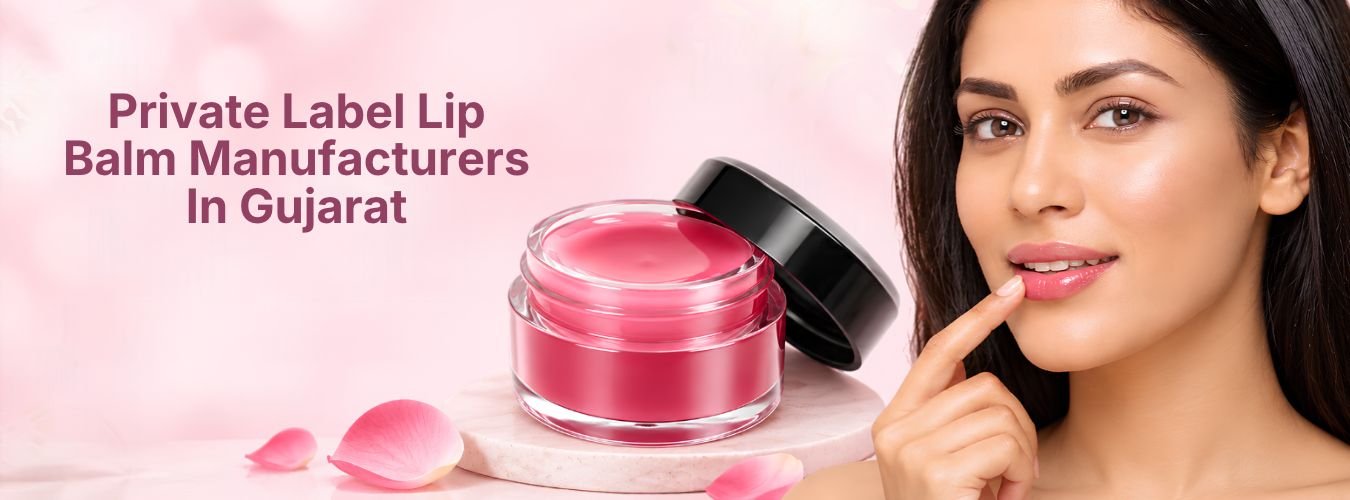
The lip care market in India is growing at a steady pace, and Gujarat has quietly become a reliable base for cosmetic manufacturing. If you are planning to launch your own lip balm brand, working with a private label manufacturer in Gujarat can save you time, money, and a lot of regulatory headaches. This guide walks you through what private label manufacturing actually means, why Gujarat is a smart choice, what to look for in a partner, and the legal side you cannot ignore.
What Private Label Manufacturing Really Means
Before diving into locations and supplier lists, it helps to understand the model itself. Private label manufacturing means a factory produces lip balm according to your brand’s specifications, but the product carries your name and packaging. You are the brand owner. The manufacturer handles the formulation, filling, and often the packaging and labeling as well.
This is different from white labeling, where you buy a ready-made product and simply put your sticker on it. With private label, you typically have more control over the formula, flavor, texture, and even the active ingredients. For a new brand trying to stand out on shelves, that control matters.
Gujarat-based manufacturers like Fresio Herbals in Surat offer end-to-end private labeling services that include product consultation, formulation, packaging design, and manufacturing . This kind of full-service arrangement is helpful if you are new to the beauty business and do not have a team of cosmetic chemists on hand.
Why Gujarat Is a Practical Choice for Lip Balm Manufacturing
Gujarat has several advantages for cosmetic manufacturing that are easy to overlook. The state has a strong industrial infrastructure, reliable power supply, and a growing cluster of chemical and personal care factories. Surat and Ahmedabad, in particular, have seen a rise in small and mid-sized cosmetic units that cater to new brands.
One practical reason is cost. Manufacturing costs in Gujarat tend to be competitive compared to metro cities, without sacrificing access to quality raw materials. The state also has a well-developed logistics network, which matters when you need to ship finished products across India or export them.
Another point is the presence of established players. Reemiga Lifescience in Surat, for example, is a GMP-certified and FDA-approved facility that offers herbal lip balm manufacturing with a minimum order quantity of 3,000 units . Fresio Herbals, also in Surat, has been operating since 2019 and offers private labeling for lip balm alongside a wide range of other personal care products . These are not massive factories, but they are exactly the kind of partners a new brand needs: small enough to care about your order, experienced enough to deliver consistent quality.
The Indian Lip Balm Market: Numbers Worth Knowing
Understanding the market size helps you make smarter decisions about your brand positioning. According to market research, the India lip balm market was valued at approximately USD 33.45 million in 2025 and is expected to reach USD 57.31 million by 2034, growing at a compound annual growth rate of about 6.16 percent .
What is interesting is that the medicated lip balm segment is not just the largest but also the fastest-growing category . This tells us something important: Indian consumers are not just buying lip balm for appearance. They want products that solve problems like dry, chapped lips, and they are willing to pay for something that feels more like care than cosmetics. If you are building a brand, this is a signal to consider formulations with ingredients like shea butter, vitamin E, or herbal extracts rather than just flavored wax.
India also accounts for a small but growing share of the global lip balm market, at around 3.52 percent in 2025. The numbers are not enormous, but the steady growth rate suggests stability rather than a fad.
What Gujarat Manufacturers Offer in Practice
When you approach a private label manufacturer in Gujarat, you will find a range of options. Let us look at what is actually available on the ground.
Minimum Order Quantities (MOQs)
This is often the first question new brand owners ask. Gujarat-based manufacturers typically ask for MOQs in the range of 3,000 to 5,000 units. Reemiga Lifescience requires 3,000 units for herbal lip balm, while Fresio Herbals asks for 5,000 pieces for private labeling services . These are reasonable numbers for a small brand testing the market, though you should confirm current MOQs directly with each supplier since policies change.
Certifications and Compliance
Most legitimate manufacturers will have GMP (Good Manufacturing Practices) certification, and many also hold ISO or FDA approvals . Reemiga Lifescience lists GMP, FDA, and ISO certifications on its facility profile . This matters because consumers and retailers increasingly ask about manufacturing standards, and having a certified partner makes your brand more credible.
Formulation Support
A good private label manufacturer will help you develop the formula, not just fill tubes. Reemiga offers in-house R&D, stability studies, and micro testing . Fresio Herbals provides product consultation and designing services alongside manufacturing . If you have a specific idea, like a vegan lip balm with SPF or a tinted balm with natural pigments, ask whether the manufacturer can develop it or only work with existing formulas.
Packaging Options
Lip balm packaging ranges from simple plastic tubes to metal tins and eco-friendly paper tubes. Some manufacturers offer packaging consultation and sourcing. Fresio Herbals explicitly lists packaging as part of its end-to-end service . If you want sustainable packaging, bring it up early because it affects cost and production timelines.
How to Evaluate a Private Label Partner
Not every manufacturer is the right fit for every brand. Here are practical checks you can do before committing.
Ask for samples first
Any serious manufacturer will send you samples of their base formulations. Apply the balm yourself. Check the texture, the scent, how it feels on your lips after an hour, and whether it leaves a waxy or greasy residue. A lip balm that feels good in a tube can feel very different on the lips.
Check the facility certifications directly
Do not just take a supplier’s word for it. Ask for copies of GMP certificates, FDA registrations, or ISO certifications. If they hesitate, that is a warning sign. The Drugs and Cosmetics Act in India requires cosmetic manufacturers to hold a valid manufacturing license, so asking about compliance is entirely reasonable.
Discuss the formulation ownership
Who owns the formula after development? If you paid for custom development, you should own or have exclusive rights to use that formula. Some manufacturers reuse similar bases across multiple clients, which is fine for stock products but not if you are paying for something unique. Get this in writing.
Visit if possible
A factory visit tells you more than any brochure. Look at the cleanliness of the production area, how ingredients are stored, and whether the staff seems knowledgeable. If a visit is not possible, ask for a video walkthrough.
Talk to existing clients
A manufacturer with a track record should be able to provide references from other brand owners. Ask those references about timelines, communication, and whether the final product matched the sample.
The Regulatory Side You Cannot Skip
Selling lip balm in India is not just about finding a factory. You need to understand the legal framework, even if your manufacturer handles most of it.
Under the Drugs and Cosmetics Act, 1940, and the Cosmetics Rules, 2020, cosmetics manufactured in India are regulated by State Licensing Authorities . Your manufacturing partner should hold a valid license in Form 32 for manufacturing cosmetics for sale or distribution . If they do not have this license, you cannot legally sell products made by them.
The license is typically valid for five years, and manufacturers must maintain batch records, test raw materials and finished products, and allow inspections . As a brand owner, you are ultimately responsible for the product on the shelf, so it is worth confirming that your manufacturer takes these obligations seriously.
Labeling is another area where you need to be careful. The Cosmetics Rules require specific declarations on the label, including the ingredient list, manufacturer information, batch number, and net content . Your manufacturer should either handle label compliance or work with you to ensure your design meets the requirements. Do not assume a designer knows cosmetic labeling rules verify.
Common Mistakes New Brand Owners Make
Starting a lip balm brand sounds simple, but a few common pitfalls trip up first-timers.
The biggest mistake is prioritizing price over quality. A difference of a few rupees per unit might seem significant when you are calculating margins, but a lip balm that separates in the tube or smells off after a month will destroy your brand reputation faster than any marketing can fix.
Another mistake is underestimating the timeline. Private label manufacturing is not instantaneous. From formulation approval to packaging sourcing to production and quality checks, a realistic timeline is often eight to twelve weeks for a first order. Fresio Herbals lists a delivery time of 30 to 45 days for some products , but that likely assumes the formula and packaging are already finalized. Build buffer time into your launch plan.
A third mistake is choosing a manufacturer without checking their track record. Gujarat has many legitimate factories, but it also has units that operate informally. Ask for the GST number, check the legal status of the firm, and verify the certifications. Reemiga Lifescience, for instance, is a limited company registered in 2024, which means it is relatively new but legally structured . Fresio Herbals has been established since 2019 and has a turnover in the range of five to ten crore rupees . These details help you assess stability.
A Realistic View of Starting Small
If you are a first-time founder, you do not need to launch with twenty SKUs. A single well-made lip balm in two or three variants can be enough to test the market. Gujarat manufacturers are generally open to smaller orders, and the MOQ of 3,000 units is achievable for a modest launch budget.
Focus on one thing: making the best lip balm you can afford. Choose a manufacturer who will let you be involved in the formulation process, who answers your questions patiently, and who has the certifications to back up their claims. The Indian lip care market is growing, but it is also competitive. The brands that last are the ones that get the product right first.
Final Thoughts
Gujarat offers a practical, cost-effective base for private label lip balm manufacturing. With established players in Surat and Ahmedabad, a supportive regulatory framework, and a growing domestic market, the state gives new brands a realistic path to launch. The key is to do your homework: verify certifications, test samples thoroughly, understand the legal requirements, and choose a partner who treats your brand as more than just another order. The lip balm on the shelf carries your name make sure everything behind it is solid.