Hair coloring has become one of the most popular beauty transformations in the modern salon and professional haircare industry. From global hair color and balayage to highlights, fashion shades, and grey coverage, consumers today are experimenting with hair color more than ever before. However, achieving vibrant, long-lasting, and salon-quality hair color results depends on much more than simply choosing the right hair dye shade. One of the most important yet often overlooked components in professional hair coloring is the hair developer.
A hair developer plays a critical role in determining how the final hair color will look, how effectively the color penetrates the hair shaft, how much lift can be achieved, and how healthy the hair remains after the coloring process. Professional hairstylists understand that even the best hair color formula may not deliver desired results if paired with the wrong developer strength. According to hair color experts, developers help open the hair cuticle, allowing color molecules to penetrate properly into the hair structure.
Modern consumers are increasingly becoming aware of professional hair color techniques, ingredient safety, and hair health preservation. As a result, demand for salon-grade developers, low-damage formulations, and bond-protecting hair color systems is growing rapidly in the professional beauty industry.
In this blog, we will explore what a hair developer is, how it works, different developer volumes, how developers affect hair color results, the importance of choosing the right developer, and how professional salon systems can help achieve healthier, shinier, and longer-lasting hair color.
What Is a Hair Developer?
A hair developer, also known as an oxidizing agent or activator, is a cream or liquid formula usually containing hydrogen peroxide that activates hair color and helps it penetrate the hair shaft. Developers are used in combination with permanent hair colors, bleaching powders, and certain demi-permanent formulations.
The main role of a developer is to:
- Open the hair cuticle
- Activate color molecules
- Help lighten natural hair pigment
- Allow color penetration into the cortex
- Support long-lasting color results
Without a developer, most permanent hair colors cannot effectively alter the hair’s internal pigment structure. Hair coloring experts explain that developers work by lifting the cuticle layer so color molecules can enter deeper into the hair shaft.
The strength of the developer directly affects:
- Color intensity
- Lift level
- Grey coverage
- Hair lightening ability
- Color longevity
- Hair condition after coloring
This is why choosing the correct developer volume is one of the most important parts of professional hair coloring.
How Hair Developer Works During Hair Coloring
To understand why developers are important, it is necessary to understand the hair coloring process itself.
Hair contains natural pigment called melanin. During permanent coloring, the developer helps break down natural melanin while simultaneously allowing artificial color molecules to penetrate the cortex of the hair.
The process generally works in the following stages:
Cuticle Opening
The developer helps open the outer cuticle layer of the hair.
Pigment Lift
Hydrogen peroxide in the developer helps lighten the natural hair pigment.
Color Penetration
Color molecules enter the hair shaft more effectively.
Oxidation Process
The color develops and stabilizes inside the cortex.
Final Color Formation
The hair achieves its desired tone, depth, and vibrancy.
According to professional haircare experts, the higher the developer volume, the more lift and lightening power it provides.
However, stronger developers may also increase the risk of dryness and damage if used incorrectly.
Understanding Different Developer Volumes
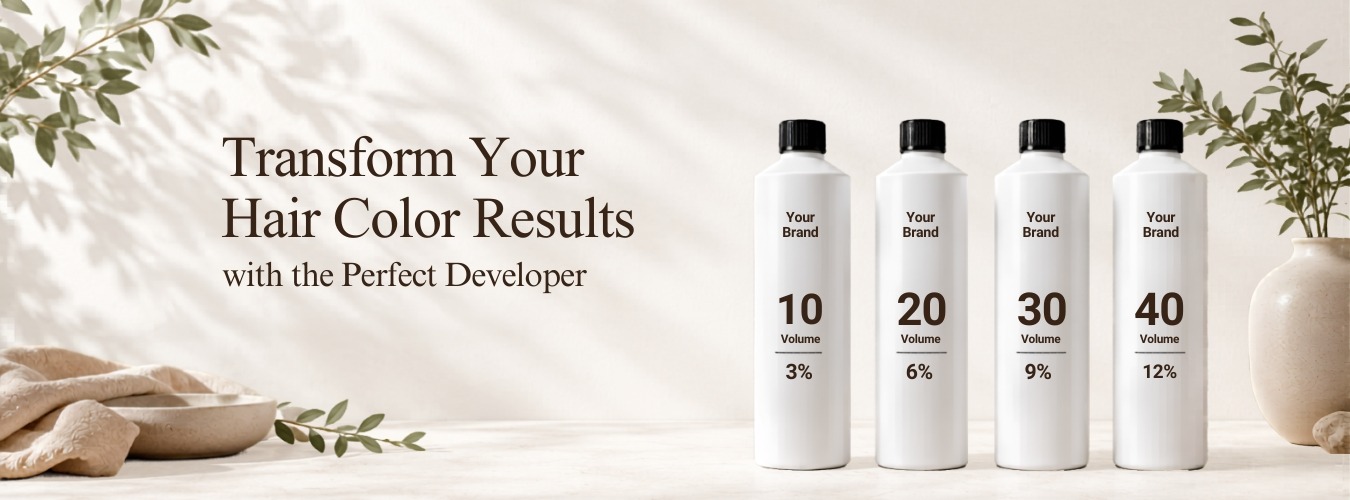
Developers are available in different strengths, commonly referred to as “volumes.” Each volume serves a different purpose in hair coloring and bleaching.
10 Volume Developer
10 volume developer contains a lower concentration of peroxide and is mainly used for:
- Minimal lift
- Color deposit
- Toning
- Darkening hair
- Grey blending
This developer is gentler on the hair and ideal for subtle color changes.
20 Volume Developer
20 volume developer is one of the most commonly used strengths in salons.
It is suitable for:
- Grey coverage
- Permanent hair coloring
- Moderate lift
- Standard salon coloring services
Most professional permanent hair colors are commonly mixed with 20 volume developer for balanced color performance.
30 Volume Developer
30 volume developer provides stronger lifting power and is used for:
- Lightening darker hair
- Highlights
- Balayage
- Fashion color preparation
This developer can create more dramatic results but requires proper professional handling.
40 Volume Developer
40 volume developer offers maximum lifting power and is mostly used for:
- Bleaching
- High-lift blonding
- Extreme lightening services
Because of its strong oxidation strength, this developer may increase the risk of hair dryness and breakage if overused.
Hair color professionals emphasize that stronger developer does not always mean better results. Choosing the right developer depends on:
- Hair type
- Existing hair color
- Hair condition
- Desired lift level
- Chemical history of the hair
Why Choosing the Right Developer Matters
Selecting the correct developer is one of the most important factors in achieving salon-quality hair color results.
Using the wrong developer can lead to:
- Uneven color
- Excessive brassiness
- Poor grey coverage
- Hair breakage
- Dryness
- Over-processing
- Faded color
Professional hairstylists carefully evaluate hair condition before selecting developer strength because every hair type reacts differently to color processing.
The correct developer helps achieve:
- Better color vibrancy
- Even color distribution
- Improved shine
- Reduced hair damage
- Long-lasting results
- Healthier-looking hair
According to hair color experts, many at-home hair coloring mistakes occur because box dyes use generalized developer strengths that may not suit every hair type.
This is why professional salon services often produce more customized and balanced results.
Hair Developer and Hair Health
Modern consumers are increasingly prioritizing hair health during coloring services. Hair developers directly affect how much stress the hair undergoes during the coloring process.
Higher developer volumes can:
- Increase dryness
- Weaken hair bonds
- Cause brittleness
- Increase porosity
- Lead to breakage
This is why the professional haircare industry is shifting toward:
- Bond-protecting color systems
- Low-ammonia formulations
- Controlled lifting techniques
- Bond repair treatments
- Moisture-focused aftercare
Industry reports indicate that bond repair and protective haircare systems are becoming major trends in salon hair coloring because consumers now seek healthier color transformations.
Professional salons increasingly combine developers with:
- Bond repair treatments
- Hair plex systems
- Protein-rich aftercare
- Sulfate-free shampoos
- Hydrating masks
to maintain hair integrity after coloring services.
Common Hair Coloring Mistakes Related to Developers
Many hair color problems are directly linked to incorrect developer selection or misuse.
Using Too Strong Developer
Higher volume developers may cause:
- Over-lightening
- Hair breakage
- Uneven lift
- Excessive dryness
Wrong Developer for Grey Coverage
Grey hair often requires balanced developer strength for proper color penetration.
Overlapping Previously Colored Hair
Repeated use of strong developers on previously processed hair may weaken the hair structure significantly.
Incorrect Processing Time
Leaving color for too long can damage hair and alter final color results.
Ignoring Hair Porosity
Highly porous hair absorbs color differently and may process faster.
Professional hairstylists recommend personalized developer selection based on hair analysis rather than using a single formula for all clients.
How Developers Affect Different Hair Coloring Services
Different hair coloring techniques require different developer strengths and application methods.
Permanent Hair Color
Permanent hair color typically uses:
- 20 volume developer
- Controlled oxidation
- Long-lasting pigment penetration
Highlights and Balayage
Lightening services often require:
- 20 or 30 volume developers
- Controlled lift
- Toners after bleaching
Grey Coverage
Grey coverage formulas commonly use:
- 20 volume developer
- Balanced processing time
- Strong pigment deposit
Bleaching Services
Bleaching generally involves:
- 20, 30, or 40 volume developer
- Lightening powders
- Bond repair systems
Demi-Permanent Hair Color
Demi-permanent colors usually use low-volume developers because they mainly deposit color rather than significantly lifting natural pigment.
Importance of Professional Hair Coloring
Although at-home hair coloring products are widely available, professional salon coloring remains highly preferred for achieving customized and healthier results.
Professional hairstylists evaluate:
- Hair texture
- Hair history
- Existing chemical treatments
- Scalp condition
- Hair porosity
- Desired color outcome
before selecting:
- Color formula
- Developer volume
- Processing technique
- Aftercare routine
This personalized approach helps minimize damage while improving color performance.
Haircare experts also emphasize that professional-grade products often include:
- Bond protection technology
- Moisturizing ingredients
- Controlled oxidation systems
- Advanced pigment technology
Modern Trends in Hair Color and Developer Technology
The professional haircare industry is evolving rapidly with safer, more advanced coloring systems.
Several trends are currently shaping the future of hair coloring.
Bond Protection Technology
Bond-building systems help reduce structural damage during bleaching and coloring.
Low-Damage Formulations
Consumers increasingly prefer:
- Ammonia-controlled formulas
- Low-volume processing
- Gentle developers
- Scalp-friendly coloring systems
Customized Hair Color
Modern salons now offer personalized color formulas based on:
- Skin tone
- Hair texture
- Hair condition
- Lifestyle preferences
Clean Beauty Haircare
Consumers increasingly seek:
- Sulfate-free aftercare
- Vegan haircare
- Silicone-controlled systems
- Ingredient transparency
Professional At-Home Haircare
Salon-inspired haircare routines and aftercare systems are becoming more popular among consumers seeking longer-lasting color maintenance.
Industry reports suggest that consumers now increasingly prioritize hair health alongside cosmetic color transformation.
Best Aftercare Routine After Hair Coloring
Developer strength and hair coloring services can affect hair moisture and overall condition. Proper aftercare is essential for maintaining color vibrancy and healthy hair.
A professional aftercare routine should include:
Sulfate-Free Shampoo
Gentle cleansing helps maintain color longevity and moisture balance.
Deep Conditioning
Protein and moisture masks help restore softness and elasticity.
Heat Protection
Heat protectants reduce damage from styling tools.
Bond Repair Treatments
Bond repair systems help strengthen weakened hair fibers.
UV Protection
Sun exposure may fade hair color and increase dryness.
Haircare experts emphasize that healthy hair maintenance is essential for preserving both color vibrancy and overall hair quality.
Why Professional Hair Color Brands Focus on Developer Quality
Modern professional haircare brands increasingly focus on developer quality because developers significantly affect:
- Color performance
- Hair health
- Lift control
- Processing consistency
- Shine
- Color longevity
Advanced salon-grade developers are now formulated with:
- Conditioning agents
- Moisturizing ingredients
- Controlled oxidation technology
- Scalp-friendly systems
This helps create better overall coloring experiences with reduced hair stress.
Professional brands also invest heavily in:
- R&D innovation
- Bond protection technology
- Color stabilization systems
- Hair repair formulations
because modern consumers increasingly prioritize healthier beauty solutions.
Why The Rich Daddy International Focuses on Advanced Haircare Innovation
The Rich Daddy International specializes in advanced cosmetic and professional haircare manufacturing solutions designed for salons, distributors, and private label beauty brands.
The company focuses on:
- Professional hair color systems
- Hair developers
- Bond repair haircare
- Hair plex treatments
- Sulfate-free formulations
- Salon-grade aftercare
- Keratin haircare
- Professional salon products
With advanced R&D capabilities, premium ingredient expertise, and modern production infrastructure, the company develops innovative haircare solutions designed for healthier, shinier, and long-lasting hair color results.
Conclusion
Hair developers play a critical role in achieving successful hair color transformations. From opening the hair cuticle and activating pigments to controlling lift levels and supporting color longevity, the developer directly influences the final outcome of any hair coloring service.
Choosing the right developer is essential for:
- Better color performance
- Balanced lift
- Grey coverage
- Reduced hair damage
- Improved shine
- Long-lasting color
Modern consumers increasingly prioritize hair health alongside beauty results, which is why the professional haircare industry is evolving toward bond-protecting systems, low-damage formulations, and personalized salon solutions.
As hair coloring trends continue growing globally, professional developer technology and advanced salon formulations will remain essential for achieving healthier, vibrant, and salon-quality hair color results. Consistent aftercare, proper product selection, and expert application techniques can help transform hair color services into healthier and more beautiful hair experiences.