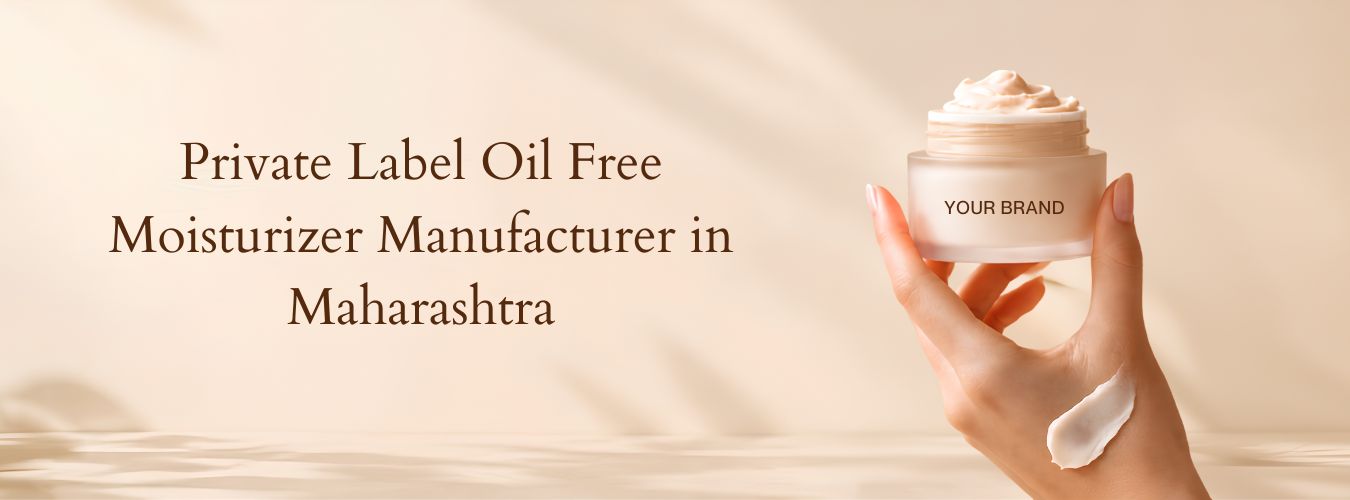
The demand for oil-free moisturizers is growing rapidly across India. More and more people are looking for lightweight products that hydrate their skin without making it greasy or causing breakouts. This has created a strong opportunity for brands that want to offer their own oil-free moisturizer products.
Maharashtra has become a key hub for cosmetic manufacturing in India. The state offers excellent infrastructure, skilled workforce, and strong export connectivity. Many businesses are now looking for private label oil-free moisturizer manufacturers in Maharashtra to launch their own brands.
Understanding Oil-Free Moisturizers
What Makes a Moisturizer “Oil-Free”?
Oil-free moisturizers are products that hydrate the skin without using heavy oils or occlusive ingredients. Instead of oils, they use ingredients like hyaluronic acid, glycerin, and niacinamide to attract and hold moisture in the skin . These formulas are lightweight and absorb quickly, making them ideal for people with oily or combination skin.
The key difference is in the texture and feel. Traditional moisturizers often contain mineral oil, coconut oil, or other emollients that can feel heavy and may clog pores. Oil-free versions use water-based or gel-based formulas that provide hydration without the greasy after-feel.
Why People Choose Oil-Free Moisturizers
There are several reasons why oil-free moisturizers have become popular:
For Oily and Acne-Prone Skin: People with oily skin often worry that moisturizers will make their skin more greasy. Oil-free formulas solve this problem by providing hydration without adding extra oil. They help balance the skin and prevent it from overproducing sebum .
For Humid Climates: In many parts of India, the weather is hot and humid for most of the year. Heavy creams can feel uncomfortable in these conditions. Oil-free moisturizers are light and breathable, making them perfect for such climates.
For Layering with Makeup: Oil-free moisturizers absorb quickly and create a smooth base for makeup. They do not cause makeup to slide off or become patchy.
For Sensitive Skin: Many oil-free formulas are non-comedogenic, meaning they do not clog pores. They are also often fragrance-free and gentle, making them suitable for sensitive skin types.
The Growing Market for Oil-Free Moisturizers
Global Market Trends
The global market for moisturizers designed for oily skin is growing steadily. In 2025, this market was valued at approximately US1.24billion.ItisexpectedtoreachUS1.24billion.ItisexpectedtoreachUS 1.56 billion by 2032, growing at a rate of 3.3% per year.
One of the key trends driving this growth is the shift toward lighter formulas. Consumers are moving away from heavy creams and choosing gel-based and water-based products instead. The market is also seeing a rise in “skinification” concepts, where hair care and body care products borrow ideas from facial skincare.
The Indian Market Opportunity
India is one of the fastest-growing markets for skincare products. The Indian hydrating gel face moisturizer market, which includes oil-free options, is tracked from 2012 to 2025 with forecasts extending to 2035 . The market is segmented by oil content, skin need, and texture, with oil-free products being a distinct and growing category.
The private label cosmetics market in India is also expanding. In 2024, this market was valued at USD 267.02 million. It is projected to reach USD 501.23 million by 2033, growing at a rate of 7.24% annually. Skincare is the largest product segment within this market.
Several factors are driving this growth:
Rising Awareness: Consumers are more educated about skincare ingredients and are actively seeking products that match their specific skin type.
Growth of E-commerce: Online platforms like Nykaa, Amazon, and Myntra have made it easier for new brands to reach customers. Digital retail is accelerating beauty product penetration in smaller markets across India.
Private Label Trust: Urban and semi-urban shoppers are showing higher trust in retailer private label lines when these deliver on quality, packaging, and trend relevance.
Younger Consumers: The increasing skincare awareness among younger consumers is a major driver. They are more willing to try new brands and products that address their specific concerns.
Why Maharashtra is a Prime Location for Manufacturing
Established Manufacturing Infrastructure
Maharashtra has long been a leader in cosmetic manufacturing in India. The Mumbai region, including areas like Vasai and Silvassa, is home to more than 400 cosmetic manufacturers. This concentration of manufacturers creates a robust ecosystem of suppliers, packaging vendors, and skilled labor.
The state offers advanced research and development facilities and strong export connectivity through the Nhava Sheva port. This makes it an ideal location for international brands that require GMP-compliant production.
Skilled Workforce and Technical Expertise
Maharashtra has a strong educational infrastructure with numerous science and engineering institutions. This provides a steady supply of skilled chemists, formulation scientists, and quality control professionals for the cosmetic industry.
The state also has a history of pharmaceutical manufacturing excellence. This expertise translates well to cosmetic manufacturing, where precision, quality control, and regulatory compliance are equally important.
Regulatory Support and Licensing
Cosmetic manufacturing licenses in India are issued by State Licensing Authorities, not by a single central authority. States like Maharashtra have established track records for cosmetic manufacturing licensing, supported by efficient processes and established industrial clusters.
This decentralized model allows businesses to choose a manufacturing state based on factors like licensing efficiency, business incentives, and proximity to raw material suppliers.
Export Connectivity
Maharashtra’s port infrastructure, particularly the Nhava Sheva port, provides excellent connectivity to international markets. This is crucial for brands that want to export their products to the Middle East, Africa, Southeast Asia, or other regions.
The state’s logistics network also supports domestic distribution across India. With major highways and rail networks, products manufactured in Maharashtra can reach markets across the country efficiently.
Concentrated Industry Clusters
The presence of a large number of cosmetic manufacturers in the Mumbai region creates a supportive ecosystem. Businesses can access:
- Raw Material Suppliers: A wide network of ingredient suppliers is available locally
- Packaging Vendors: Companies specializing in cosmetic packaging are concentrated in the region
- Testing Laboratories: Independent labs for stability and safety testing are easily accessible
- Regulatory Consultants: Experts who can help navigate licensing and compliance requirements
Key Ingredients in Modern Oil-Free Moisturizers
Hyaluronic Acid
Hyaluronic acid is a powerful humectant that attracts and holds moisture. It can hold up to 1,000 times its weight in water. In oil-free moisturizers, it provides deep hydration without any greasy feel.
Niacinamide
Niacinamide is a form of Vitamin B3 that offers multiple benefits. It helps regulate oil production, strengthens the skin barrier, and improves skin texture. It is a common ingredient in moisturizers designed for oily and combination skin.
Glycerin
Glycerin is a classic humectant that draws moisture from the air into the skin. It is lightweight and non-comedogenic, making it ideal for oil-free formulas.
Aloe Vera
Aloe vera is a natural soothing agent that provides light hydration. It is often used in gel-based moisturizers for its calming and refreshing properties.
Ceramides
Ceramides are lipids that occur naturally in the skin. They help maintain the skin barrier and prevent moisture loss. In oil-free moisturizers, they provide barrier support without adding oil.
Vitamin C
Vitamin C is an antioxidant that brightens the skin and supports collagen production. Some oil-free moisturizers include vitamin C to provide additional skincare benefits.
What to Look for in a Private Label Manufacturer
If you are planning to launch your own oil-free moisturizer brand, choosing the right manufacturer is critical. Here are the key factors to consider:
Manufacturing Capabilities
Look for a manufacturer with modern facilities and equipment. They should have the capacity to handle your production volume, whether you are starting with a small batch or planning a large-scale launch. Automated filling and packaging lines ensure efficiency, hygiene, and consistency.
Custom Formulation Support
A good private label manufacturer will offer custom formulation services. This allows you to create a unique product that matches your brand’s positioning and target market. Whether you want a specific texture, a particular active ingredient, or a unique fragrance, the manufacturer should be able to develop it for you.
Quality Control and Testing
Quality control is essential in cosmetic manufacturing. The manufacturer should have an in-house laboratory for testing raw materials and finished products. They should follow Good Manufacturing Practices and conduct stability testing to ensure the product remains effective throughout its shelf life.
Regulatory Compliance
The manufacturer should comply with all relevant regulations, including those set by the Central Drugs Standard Control Organisation and the Bureau of Indian Standards. For cosmetic products, compliance with the Drugs and Cosmetics Act, 1945, and its rules is mandatory.
Packaging Options
A good manufacturer will offer a range of packaging options. For oil-free moisturizers, common packaging includes:
- Airless Pump Bottles: These prevent contamination and ensure precise dispensing
- Tubes: Convenient and travel-friendly
- Jars: Suitable for thicker gel-creams
- Pump Bottles: Good for lotion-type formulas
The manufacturer should be able to help you select the right packaging for your product and target market.
Lead Times and Minimum Order Quantities
Understanding lead times and minimum order quantities is important for planning your launch. Typical lead times for private label cosmetic manufacturing range from 30 to 45 days, depending on the complexity of the formulation and packaging . Minimum order quantities vary by manufacturer, so discuss your requirements upfront.
The Private Label Process
Step 1: Consultation and Product Selection
The process begins with a consultation. You discuss your product concept, target market, and requirements with the manufacturer. They will recommend suitable formulations and help you select the right product type.
Step 2: Sampling
Once the concept is finalized, the manufacturer creates samples for you to review. You can test the texture, feel, and performance of the product. This is also the time to request any modifications to the formula.
Step 3: Formulation and Testing
After you approve the sample, the manufacturer finalizes the formulation. They conduct stability testing to ensure the product remains effective over time. Safety testing is also performed to confirm the product is safe for use.
Step 4: Packaging and Labeling
The manufacturer helps you select packaging that suits your product and brand image. They also assist with labeling, ensuring all regulatory requirements are met, including ingredient lists, net quantity, and manufacturer information.
Step 5: Production and Quality Control
Once everything is approved, full-scale production begins. The manufacturer follows strict quality control procedures throughout the production process. Samples are tested at various stages to ensure consistency and quality.
Step 6: Shipping and Delivery
After production is complete and final quality checks are passed, the products are packaged and shipped to your location. A good manufacturer will have reliable logistics partners to ensure on-time delivery.
Market Opportunities for Your Brand
The Growing Demand for Lightweight Skincare
Consumers are increasingly choosing lightweight, breathable skincare products. This is especially true in India, where hot and humid weather makes heavy creams uncomfortable. Oil-free moisturizers meet this demand perfectly.
The Rise of Men’s Skincare
The men’s skincare market in India is growing rapidly. Men are becoming more aware of skincare and are looking for products that suit their skin type. Oil-free moisturizers are particularly popular among male consumers because they feel light and non-greasy.
E-commerce and D2C Brands
The growth of e-commerce has made it easier for new brands to enter the market. Direct-to-consumer brands can reach customers across India without the need for extensive retail distribution. Social media and influencer marketing have also made it easier to build brand awareness and trust.
Clean and Sustainable Beauty
Consumers are increasingly interested in products that are clean, cruelty-free, and sustainable. Oil-free moisturizers that use natural ingredients and eco-friendly packaging can appeal to this growing segment.
Conclusion
The demand for oil-free moisturizers is growing in India and around the world. Maharashtra offers an excellent environment for manufacturing these products, with its established infrastructure, skilled workforce, and strong regulatory support.
Whether you are planning to launch a new brand or expand your existing product line, choosing the right private label manufacturer is key to your success. Look for a manufacturer with strong formulation capabilities, quality control systems, and experience in producing oil-free skincare products.
With the right partner, you can create effective oil-free moisturizers that meet the needs of today’s consumers and build a successful brand in this growing market.